Psalm 38 Poetic Features
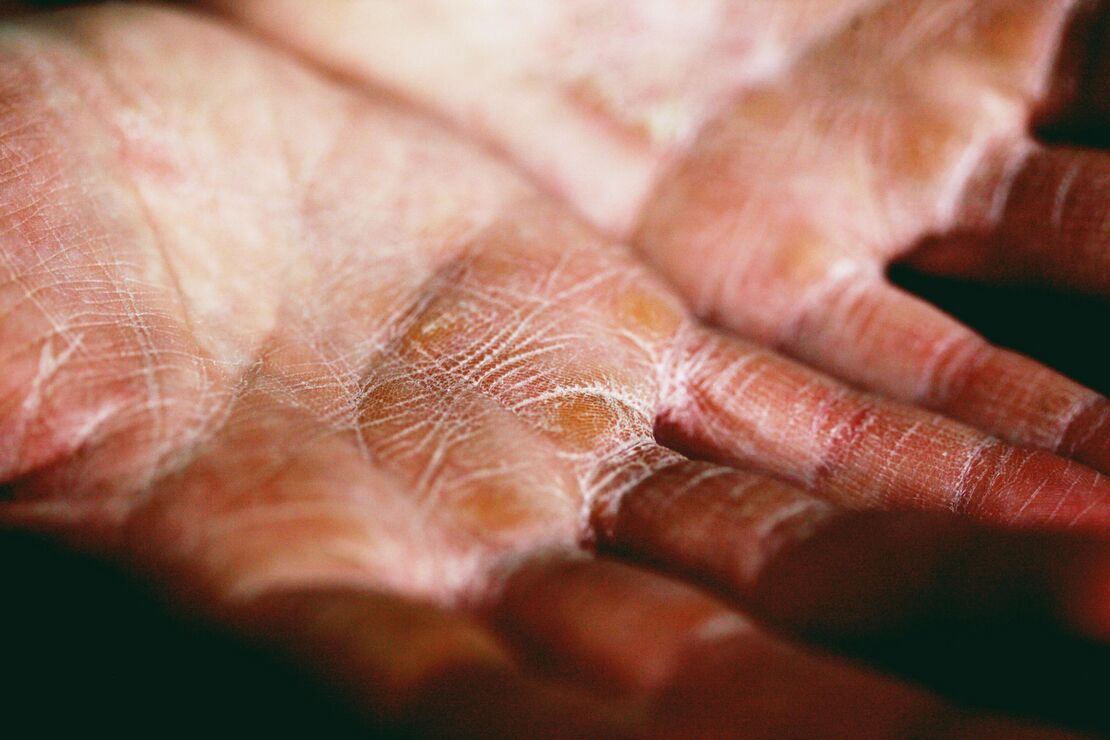
No healthy spot left
Psalm 38
Guardian: Amanda Jarus

Poetic Features
In poetic features, we identify and describe the “Top 3 Poetic Features” for each Psalm. Poetic features might include intricate patterns (e.g., chiasms), long range correspondences across the psalm, evocative uses of imagery, sound-plays, allusions to other parts of the Bible, and various other features or combinations of features. For each poetic feature, we describe both the formal aspects of the feature and the poetic effect of the feature. We assume that there is no one-to-one correspondence between a feature’s formal aspects and its effect, and that similar forms might have very different effects depending on their contexts. The effect of a poetic feature is best determined (subjectively) by a thoughtful examination of the feature against the background of the psalm’s overall message and purpose.
Intensified dependence
If an emendation or revocalization is preferred, that emendation or revocalization will be marked in the Hebrew text of all the visuals.
| Emendations/Revocalizations legend | |
|---|---|
| *Emended text* | Emended text, text in which the consonants differ from the consonants of the Masoretic text, is indicated by blue asterisks on either side of the emendation. |
| *Revocalized text* | Revocalized text, text in which only the vowels differ from the vowels of the Masoretic text, is indicated by purple asterisks on either side of the revocalization. |

Feature
In Psalm 38, the vocatives addressing YHWH are arranged into four key positions (v. 2, 10, 16, 22-23) in an intensifying progression.
The first two occurrences have one vocative per verse, both different names of God (יְֽהוָ֗ה YHWH in v. 2, אֲֽדֹנָי My Lord in v. 10). In verse 16, those two vocatives re-appear, along with another name for God, אֱלֹהָֽי my God. In that verse, three of the seven prosodic words are vocatives. In the last two verses of the psalm, all of those three vocatives re-appear again, alongside one more: תְּשׁוּעָתִֽי, where David calls on God using the title "my salvation." Similar to v. 16, 4 of the 9 prosodic words are vocatives between these two verses and 3 of those remaining are directives.
The number of vocatives thus increases in the last stanza of the psalm, creating an intensifying 1-1-3-4 progression, culminating in vv. 22-23.
The distance between the vocatives also decreases. The distance between the first verse with a vocative (v. 2) and the second (v. 10) is 16 lines; between the second and the third (v. 16) is 14 lines; between the third and the beginning of the fourth group of vocatives (vv. 22-23) is 12 lines.
Effect
While the number of vocatives does not increase in vv. 2 and 10, the distance between the vocatives decreases, showing a slight intensification in the tone of the psalm. In Ps 38, the tone is that of the psalmist's dependence upon YHWH. This is suddenly increased with the use of three vocatives in v. 16. And in vv. 22-23, the intensification increases slightly again with the use of four vocatives, but in roughly the same proportion as v. 16.
The sudden shift from just one vocative to three in v. 16 indicates the tipping point in the psalmist's dependence. This increases slightly again in vv. 22-23, where he feels he has less time to communicate what he needs, to the point that at the end there are more vocatives than directives in those last two verses. The only person he has to turn to is YHWH: he cannot answer his enemies himself and his friends have abandoned him.
Do not abandon me!
If an emendation or revocalization is preferred, that emendation or revocalization will be marked in the Hebrew text of all the visuals.
| Emendations/Revocalizations legend | |
|---|---|
| *Emended text* | Emended text, text in which the consonants differ from the consonants of the Masoretic text, is indicated by blue asterisks on either side of the emendation. |
| *Revocalized text* | Revocalized text, text in which only the vowels differ from the vowels of the Masoretic text, is indicated by purple asterisks on either side of the revocalization. |

Feature
In Psalm 38, there are many words marking absence or abandonment. The elements that abandon the psalmist range widely, however. Some refer to the psalmist's physical condition (מְתֹ֣ם 'sound spot' v. 4 and 8, שָׁל֥וֹם 'well-being' v. 4, כֹחִ֑י 'my strength' v. 11, אוֹר־עֵינַ֥י 'the light of my eyes' v. 11). In the latter half of the psalm, the psalmist's ability to speak and hear also is not with him (vv. 14-15). It is this lack of speech and hearing which leads to the lack of arguments the psalmist can make to defend himself (v. 15). Even his feet betray him in that they slip, rather than supporting him (v. 17).
However, it is not just the psalmist's body that is described as having abandoned him. In v. 12, those who love him, his companions, and his relatives (אֹֽהֲבַ֨י ׀ וְרֵעַ֗י and קְרוֹבַ֗י) stand at a distance, abandoning him.
In the face of all this abandonment, the ultimate potential abandonment the psalmist fears would be YHWH's, which is why he pleads for YHWH not to abandon or be far from him (v. 22).
Effect
The accumulating abandonment of body, strength, and friends culminates in the cry of the psalmist in v. 22. He cries for YHWH not to abandon him as his strength has done. He cries for YHWH not to be far from him as his relatives and friends are far. He wants YHWH to act differently -- to be the one reliable source of hope.
Every other hope (his own strength, his friends, his relatives) has failed. YHWH is the only hope left, so he pleads with YHWH to hurry to help.
You must answer!
If an emendation or revocalization is preferred, that emendation or revocalization will be marked in the Hebrew text of all the visuals.
| Emendations/Revocalizations legend | |
|---|---|
| *Emended text* | Emended text, text in which the consonants differ from the consonants of the Masoretic text, is indicated by blue asterisks on either side of the emendation. |
| *Revocalized text* | Revocalized text, text in which only the vowels differ from the vowels of the Masoretic text, is indicated by purple asterisks on either side of the revocalization. |

Feature
As a number of scholars have pointed out, v. 16 stands out as a key moment in Ps 38, being the only place the psalmist expresses a positive outlook, centered on his hope in YHWH (cf. Labuschagne 2008, 4; Terrien 2003, 325-326).
Ps 38 seems to point to this verse as a key moment by placing it at the heart of multiple symmetric patterns:
Of the three occurrences of יְהוָה, the middle occurrence is in v. 16. Similarly, the middle instance of the three occurrences of אֲדֹנָי is in v. 16. There are seven uses of כִי in this psalm, and the middle instance is also in v. 16. The first-person pronoun אֲנִי appears equidistantly from v. 16, -- v. 14 and v. 18.
Furthermore, v. 16 stands between vv. 4-5 and vv. 19-21, which have mirroring sequences of words/roots:
vv. 4-5:
- שלם well-being
- עצם my bones
- מן + חטאת because of my sin
- עָוֹן my iniquities
vv. 19-21:
- עָוֹן my iniquity
- מן + חטאת because of my sin
- עצם mighty
- שלם those who repay
Effect
The middle occurrence for יְהוָה and אֲדֹנָי and כִי point to v. 16 to being pivotal within this psalm. When seen in relation to the double אֲנִי and the chain of words from vv. 4-5 repeated in vv. 19-21, a clear chiasm is seen that focuses on v. 16.
This verse provides the central grounding point for David's lament: even though everyone has abandoned him, there is still hope in YHWH. The psalmist accepts there is hope nowhere else and concludes that, "It is you, my Lord, my God, who must answer."
When surrounded by his own iniquity and sin, suffering deeply, and opposed by mighty enemies, his focus is on YHWH and the hope that YHWH will answer.
Repeated Roots
The repeated roots table is intended to identify the roots which are repeated in the psalm.
| Repeated Roots legend | |
|---|---|
| Divine name | The divine name is indicated by bold purple text. |
| Roots bounding a section | Roots bounding a section, appearing in the first and last verse of a section, are indicated by bold red text. |
 |
Roots occurring primarily in the first section are indicated in a yellow box. |
 |
Roots occurring primarily in the third section are indicated in a blue box. |
 |
Roots connected across sections are indicated by a vertical gray line connecting the roots. |
 |
Section boundaries are indicated by a horizontal black line across the chart. |
