Psalm 38 Poetry
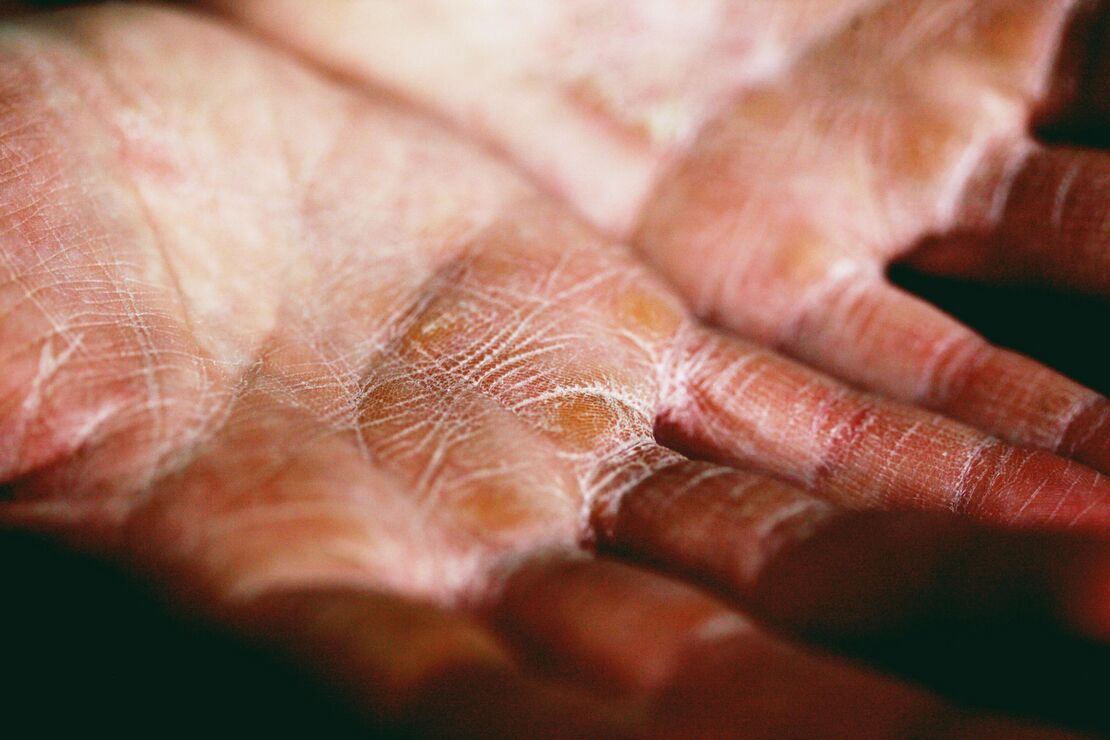
No healthy spot left
Psalm 38
Guardian: Amanda Jarus
About the Poetics Layer
Exploring the Psalms as poetry is crucial for understanding and experiencing the psalms and thus for faithfully translating them into another language. This layer is comprised of two main parts: Poetic Structure and Poetic Features.
Poetic Structure
In poetic structure, we analyse the structure of the psalm beginning at the most basic level of the structure: the line (also known as the “colon” or “hemistich”). Then, based on the perception of patterned similarities (and on the assumption that the whole psalm is structured hierarchically), we argue for the grouping of lines into verses, verses into sub-sections, sub-sections into larger sections, etc. Because patterned similarities might be of various kinds (syntactic, semantic, pragmatic, sonic) the analysis of poetic structure draws on all of the previous layers (especially the Discourse layer).
Poetic Macro-structure
If an emendation or revocalization is preferred, that emendation or revocalization will be marked in the Hebrew text of all the visuals.
| Emendations/Revocalizations legend | |
|---|---|
| *Emended text* | Emended text, text in which the consonants differ from the consonants of the Masoretic text, is indicated by blue asterisks on either side of the emendation. |
| *Revocalized text* | Revocalized text, text in which only the vowels differ from the vowels of the Masoretic text, is indicated by purple asterisks on either side of the revocalization. |
| v. 1 A psalm. By David. To bring to remembrance. | Superscription | |||
| v. 2 YHWH, do not rebuke me when you’re angry, or discipline me when you’re wrathful! | My suffering | My sin has caused my suffering. There is no sound spot in my flesh. |
 |
guilt misery
|
| v. 3 For your arrows have been shot into me, and your hand has struck me. | ||||
| v. 4 There is no sound spot in my flesh because of your anger. There is no well-being in my bones because of my sin. | ||||
| v. 5 For my iniquities have gone over my head. Like a heavy burden, they are too heavy for me to handle. | ||||
| v. 6 My wounds have become foul with rot because of my folly. | ||||
| v. 7 I have become completely contorted. I have walked about constantly mourning. | ||||
| v. 8 For my sides are full of inflammation, and there is no sound spot in my flesh. | ||||
| v. 9 I have become weak and have been crushed completely. I have been groaning because of the severe suffering of my heart. | ||||
| v. 10 My Lord, everything I long for is before you, and my moaning is not hidden from you. | My abandonment | My strength and my friends have abandoned me, and my enemies pursue my harm. I am unable to speak. |
 |
abandonment vulnerability
|
| v. 11 My heart has been pounding. My strength has abandoned me, and the light of my eyes, even that is not with me! | ||||
| v. 12 Those who love me, my companions, are standing far away from my injury, and my relatives have stood at a distance. | ||||
| v. 13 And those who seek to take my life have set a trap, and those who pursue my harm have been speaking of disaster, and they are constantly muttering treachery. | ||||
| v. 14 But I, like a deaf person, cannot hear. And [I am] like a mute person [who] cannot open his mouth. | ||||
| v. 15 And so I have become like a man who does not hear and who has no arguments in his mouth. | ||||
| v. 16 But, YHWH, I have hoped for you. You yourself must answer, my Lord, my God. | My only hope | I am distressed about what will happen because of my suffering and my sin and my enemies' baseless accusations. You, YHWH, must answer. Don’t abandon me now! |
 |
distress dependence
|
| v. 17 For I thought that they would rejoice concerning me, [those who] have considered themselves superior to me when my feet slip. | ||||
| v. 18 For I am certain to stumble, and my pain is always before me. | ||||
| v. 19 Although I confess my iniquity, I am distressed because of my sin. | ||||
| v. 20 And those who are my enemies for no reason are mighty, and those who hate me without cause are numerous. | ||||
| v. 21 And those who repay with evil in response to good accuse me in response to my pursuit of good. | ||||
| v. 22 Do not abandon me, YHWH! My God, do not be far from me! | ||||
| v. 23 Hurry to help me, my Lord, my salvation! | ||||

Notes
- This psalm is composed of three sections (vv. 2-9 // vv. 10-15 // vv. 16-23).
- Each section begins with a vocative addressing the Lord (v. 2, v. 10, and v. 16). In addition, the beginning of each section uses 2nd person pronominal suffixes, but they quickly drop off and do not appear again until the next section (vv. 2-4a, 10, and 16). Vocatives also close the final section (vv. 22-23).
- Altogether the sections create an A // B // AB pattern through the topics discussed with each section introduced with the vocative. The first segment (vv. 2-9) addresses the psalmist's pain and suffering. The second segment (vv. 10-15) addresses the people who have abandoned the psalmist, including enemies. The third segment (vv. 16-23) then addresses both the psalmist's pain and suffering (vv. 18-19) and the psalmist's enemies (vv. 20-21).
- The psalm as an entirety is enclosed by a inclusio, where imperatives appear at the beginning and at the very end. The imperatives are especially striking since there are no other imperatives present in the psalm.
- Verses 12-15 use similar poetic devices. In verse 12, those who are supposed to be close (וּ֝קְרוֹבַ֗י) are actually at a distance (מֵרָחֹ֥ק). On the opposite end of the spectrum, vv. 14-15 are dominated by repeated tautologies.
- While scholars typically recognize the inclusio, the division of sections within the psalm is more debated.
- Craigie divides the psalm into two stanzas surrounded by an inclusio (vv. 3-11 // vv. 12-21; Craigie 2004, 302).
- Delitzsch separates this psalm into the three stanzas as presented here, but does not give further subdivisions (Delitzsch 1871, 21-24).
- Van der Lugt also separates this psalm into three stanzas, but groups the verses differently (vv. 2-9 // vv. 10-19 // vv. 20-23). He further breaks down the first and second stanzas into two smaller sections (vv. 2-5 // vv. 6-9; vv. 10-15 // vv. 16-19; Lugt 2006, 381). Even though the divisions of the larger stanzas disagrees with the analysis presented here, the breaks of the smaller sections correlate.
- Similarly, Fokkelman also follows similar breaks, but divides the psalm into five stanzas rather than three (vv. 2-5 // vv. 6-9 // vv. 10-15 // vv. 16-19 // vv. 20-23). He does this on the basis of the number of cola and verses (Fokkelmann 2000, 144).
- The analysis of the first stanza with four strophes of two verses each is supported by both Fokkelman and Lugt (Fokkelman 2000, 144; Lugt 2006, 381). Another potential analysis would divide it into three strophes (vv. 2-3 // vv. 4-6 // vv. 7-9).
- For the emendation *חִנָּם*, see the exegetical issue on v. 20. MT: חַיִּ֣ים.
Line Divisions
Line division divides the poem into lines and line groupings. We determine line divisions based on a combination of external evidence (Masoretic accents, pausal forms, manuscripts) and internal evidence (syntax, prosodic word counting and patterned relation to other lines). Moreover, we indicate line-groupings by using additional spacing.
When line divisions are uncertain, we consult some of the many psalms manuscripts which lay out the text in lines. Then, if a division attested in one of these manuscripts/versions influences our decision to divide the text at a certain point, we place a green symbol (G, DSS, or MT) to the left of the line in question.
| Poetic line division legend | |
|---|---|
| Pausal form | Pausal forms are highlighted in yellow. |
| Accent which typically corresponds to line division | Accents which typically correspond to line divisions are indicated by red text. |
| | | Clause boundaries are indicated by a light gray vertical line in between clauses. |
| G | Line divisions that follow Greek manuscripts are indicated by a bold green G. |
| DSS | Line divisions that follow the Dead Sea Scrolls are indicated by a bold green DSS. |
| M | Line divisions that follow Masoretic manuscripts are indicated by a bold green M. |
| Number of prosodic words | The number of prosodic words are indicated in blue text. |
| Prosodic words greater than 5 | The number of prosodic words if greater than 5 is indicated by bold blue text. |
If an emendation or revocalization is preferred, that emendation or revocalization will be marked in the Hebrew text of all the visuals.
| Emendations/Revocalizations legend | |
|---|---|
| *Emended text* | Emended text, text in which the consonants differ from the consonants of the Masoretic text, is indicated by blue asterisks on either side of the emendation. |
| *Revocalized text* | Revocalized text, text in which only the vowels differ from the vowels of the Masoretic text, is indicated by purple asterisks on either side of the revocalization. |

Notes
- Verse 12 could either be a bicolon or a tricolon. The tricolon reading is supported by the use of revia gadol and the line reading represented in the Aleppo Codex. The bicolon reading is supported by the Greek manuscripts and the Hebrew manuscript Berlin Qu 680. Several scholars also take this view (Fokkelman 2000, 144; Lugt 2006, 381). Also, it is worth noting that while there is a revia gadol, the vowel is not lengthened, which would point to reading this verse as a bicolon. The bicolon would have 5 words on the first line and 3 words on the second. While this is not an unlikely length, it would be the longest line in the entire psalm. The tricolon also would match the only other tricolon in the psalm, v. 13. This creates greater cohesion between these verses. With these two verses grouped together at the center of the psalm, there are 20 lines before and after. Because of these reasons, we have preferred the reading of the tricolon in this analysis.
Poetic Features
In poetic features, we identify and describe the “Top 3 Poetic Features” for each Psalm. Poetic features might include intricate patterns (e.g., chiasms), long range correspondences across the psalm, evocative uses of imagery, sound-plays, allusions to other parts of the Bible, and various other features or combinations of features. For each poetic feature, we describe both the formal aspects of the feature and the poetic effect of the feature. We assume that there is no one-to-one correspondence between a feature’s formal aspects and its effect, and that similar forms might have very different effects depending on their contexts. The effect of a poetic feature is best determined (subjectively) by a thoughtful examination of the feature against the background of the psalm’s overall message and purpose.
Intensified dependence
If an emendation or revocalization is preferred, that emendation or revocalization will be marked in the Hebrew text of all the visuals.
| Emendations/Revocalizations legend | |
|---|---|
| *Emended text* | Emended text, text in which the consonants differ from the consonants of the Masoretic text, is indicated by blue asterisks on either side of the emendation. |
| *Revocalized text* | Revocalized text, text in which only the vowels differ from the vowels of the Masoretic text, is indicated by purple asterisks on either side of the revocalization. |

Feature
In Psalm 38, the vocatives addressing YHWH are arranged into four key positions (v. 2, 10, 16, 22-23) in an intensifying progression.
The first two occurrences have one vocative per verse, both different names of God (יְֽהוָ֗ה YHWH in v. 2, אֲֽדֹנָי My Lord in v. 10). In verse 16, those two vocatives re-appear, along with another name for God, אֱלֹהָֽי my God. In that verse, three of the seven prosodic words are vocatives. In the last two verses of the psalm, all of those three vocatives re-appear again, alongside one more: תְּשׁוּעָתִֽי, where David calls on God using the title "my salvation." Similar to v. 16, 4 of the 9 prosodic words are vocatives between these two verses and 3 of those remaining are directives.
The number of vocatives thus increases in the last stanza of the psalm, creating an intensifying 1-1-3-4 progression, culminating in vv. 22-23.
The distance between the vocatives also decreases. The distance between the first verse with a vocative (v. 2) and the second (v. 10) is 16 lines; between the second and the third (v. 16) is 14 lines; between the third and the beginning of the fourth group of vocatives (vv. 22-23) is 12 lines.
Effect
While the number of vocatives does not increase in vv. 2 and 10, the distance between the vocatives decreases, showing a slight intensification in the tone of the psalm. In Ps 38, the tone is that of the psalmist's dependence upon YHWH. This is suddenly increased with the use of three vocatives in v. 16. And in vv. 22-23, the intensification increases slightly again with the use of four vocatives, but in roughly the same proportion as v. 16.
The sudden shift from just one vocative to three in v. 16 indicates the tipping point in the psalmist's dependence. This increases slightly again in vv. 22-23, where he feels he has less time to communicate what he needs, to the point that at the end there are more vocatives than directives in those last two verses. The only person he has to turn to is YHWH: he cannot answer his enemies himself and his friends have abandoned him.
Do not abandon me!
If an emendation or revocalization is preferred, that emendation or revocalization will be marked in the Hebrew text of all the visuals.
| Emendations/Revocalizations legend | |
|---|---|
| *Emended text* | Emended text, text in which the consonants differ from the consonants of the Masoretic text, is indicated by blue asterisks on either side of the emendation. |
| *Revocalized text* | Revocalized text, text in which only the vowels differ from the vowels of the Masoretic text, is indicated by purple asterisks on either side of the revocalization. |

Feature
In Psalm 38, there are many words marking absence or abandonment. The elements that abandon the psalmist range widely, however. Some refer to the psalmist's physical condition (מְתֹ֣ם 'sound spot' v. 4 and 8, שָׁל֥וֹם 'well-being' v. 4, כֹחִ֑י 'my strength' v. 11, אוֹר־עֵינַ֥י 'the light of my eyes' v. 11). In the latter half of the psalm, the psalmist's ability to speak and hear also is not with him (vv. 14-15). It is this lack of speech and hearing which leads to the lack of arguments the psalmist can make to defend himself (v. 15). Even his feet betray him in that they slip, rather than supporting him (v. 17).
However, it is not just the psalmist's body that is described as having abandoned him. In v. 12, those who love him, his companions, and his relatives (אֹֽהֲבַ֨י ׀ וְרֵעַ֗י and קְרוֹבַ֗י) stand at a distance, abandoning him.
In the face of all this abandonment, the ultimate potential abandonment the psalmist fears would be YHWH's, which is why he pleads for YHWH not to abandon or be far from him (v. 22).
Effect
The accumulating abandonment of body, strength, and friends culminates in the cry of the psalmist in v. 22. He cries for YHWH not to abandon him as his strength has done. He cries for YHWH not to be far from him as his relatives and friends are far. He wants YHWH to act differently -- to be the one reliable source of hope.
Every other hope (his own strength, his friends, his relatives) has failed. YHWH is the only hope left, so he pleads with YHWH to hurry to help.
You must answer!
If an emendation or revocalization is preferred, that emendation or revocalization will be marked in the Hebrew text of all the visuals.
| Emendations/Revocalizations legend | |
|---|---|
| *Emended text* | Emended text, text in which the consonants differ from the consonants of the Masoretic text, is indicated by blue asterisks on either side of the emendation. |
| *Revocalized text* | Revocalized text, text in which only the vowels differ from the vowels of the Masoretic text, is indicated by purple asterisks on either side of the revocalization. |

Feature
As a number of scholars have pointed out, v. 16 stands out as a key moment in Ps 38, being the only place the psalmist expresses a positive outlook, centered on his hope in YHWH (cf. Labuschagne 2008, 4; Terrien 2003, 325-326).
Ps 38 seems to point to this verse as a key moment by placing it at the heart of multiple symmetric patterns:
Of the three occurrences of יְהוָה, the middle occurrence is in v. 16. Similarly, the middle instance of the three occurrences of אֲדֹנָי is in v. 16. There are seven uses of כִי in this psalm, and the middle instance is also in v. 16. The first-person pronoun אֲנִי appears equidistantly from v. 16, -- v. 14 and v. 18.
Furthermore, v. 16 stands between vv. 4-5 and vv. 19-21, which have mirroring sequences of words/roots:
vv. 4-5:
- שלם well-being
- עצם my bones
- מן + חטאת because of my sin
- עָוֹן my iniquities
vv. 19-21:
- עָוֹן my iniquity
- מן + חטאת because of my sin
- עצם mighty
- שלם those who repay
Effect
The middle occurrence for יְהוָה and אֲדֹנָי and כִי point to v. 16 to being pivotal within this psalm. When seen in relation to the double אֲנִי and the chain of words from vv. 4-5 repeated in vv. 19-21, a clear chiasm is seen that focuses on v. 16.
This verse provides the central grounding point for David's lament: even though everyone has abandoned him, there is still hope in YHWH. The psalmist accepts there is hope nowhere else and concludes that, "It is you, my Lord, my God, who must answer."
When surrounded by his own iniquity and sin, suffering deeply, and opposed by mighty enemies, his focus is on YHWH and the hope that YHWH will answer.
Repeated Roots
The repeated roots table is intended to identify the roots which are repeated in the psalm.
| Repeated Roots legend | |
|---|---|
| Divine name | The divine name is indicated by bold purple text. |
| Roots bounding a section | Roots bounding a section, appearing in the first and last verse of a section, are indicated by bold red text. |
 |
Roots occurring primarily in the first section are indicated in a yellow box. |
 |
Roots occurring primarily in the third section are indicated in a blue box. |
 |
Roots connected across sections are indicated by a vertical gray line connecting the roots. |
 |
Section boundaries are indicated by a horizontal black line across the chart. |

Bibliography
- Arndt, William, Frederick W. Danker, Walter Bauer, and F. Wilbur Gingrich. 2000. A Greek-English Lexicon of the New Testament and Other Early Christian Literature. 3rd ed. Chicago: University of Chicago Press.
- Baethgen, Friedrich. 1904. Die Psalmen. Göttingen: Vandenhoeck und Ruprecht.
- Delitzsch, Franz. 1871. Biblical Commentary on the Psalms: Vol. 2. Translated by Francis Bolton. Edinburgh: T & T Clark.
- Fokkelman, J.P. 2000. Major Poems of the Hebrew Bible: At the Interface of Prosody and Structural Analysis (Vol 2: 85 Psalms and Job 4–14). Vol. 2. Studia Semitica Neerlandica. Assen: Van Gorcum.
- Gunkel, Hermann. 1926. Die Psalmen. 4th ed. Göttinger Handkommentar Zum Alten Testament 2. Göttingen: Vandenhoeck & Ruprecht.
- ________. 1998. An Introduction to the Psalms: The Genres of the Religious Lyric of Israel. Translated by James D. Nogalski. Macon, GA: Mercer University Press.
- Hupfeld, Hermann. 1868. Die Psalmen. Vol. 2. Gotha: Friedrich Andreas Perthes.
- Jenni, Ernst. 1992. Die Hebräischen Präpositionen Band 1: Die Präposition Beth. Stuttgart: W. Kohlhammer.
- Kim, Young Bok. 2022. Hebrew Forms of Address: A Sociolinguistic Analysis. Atlanta: SBL Press.
- Keel, Othmar. 1997. The Symbolism of the Biblical World: Ancient Near Eastern Iconography and the Book of Psalms. Winona Lake, IN: Eisenbrauns.
- Labuschagne, Casper J. 2008. “Psalm 38 - Logotechnical Analysis.” Numerical Features of the Psalms and Other Selected Texts. August 5, 2008.
- Leveen, J. 1971. “Textual Problems in the Psalms.” VT 21: 48–58.
- Lugt, Pieter van der. 2006. Cantos and Strophes in Biblical Hebrew Poetry: With Special Reference to the First Book of the Psalter. Vol. 1 of 3 vols. Oudtestamentische Studiën 53. Leiden: Brill.
- Mowinckel, Sigmund. 1962. The Psalms in Israel’s Worship. Oxford: Blackwell.
- Rashi. Rashi on Psalms.
- Ryken, Leland, Jim Wilhoit, Tremper Longman, Colin Duriez, Douglas Penney, and Daniel G. Reid, eds. 1998. Dictionary of Biblical Imagery. Downers Grove, IL: InterVarsity Press.
- Wolff, Hans Walter. 1974. Anthropology of the Old Testament. Translated by Margaret Kohl. Philadelphia: Fortress.
- Smend, Rudolf. 1888. "Ueber das Ich der Psalmen." In Zeitschrift für die alttestamentliche Wissenschaft 8. Giessen: J. Ricker'sche Buchhandlung.
- Terrien, Samuel L. 2003. The Psalms: Strophic Structure and Theological Commentary. ECC. Grand Rapids: Eerdmans.